



Microplastics and Nanoplastics (MNP) Contaminate the Human Brain
A recent scientific study led by Beijing Tiantan Hospital and published in Nature Health reveals that plastic particles have managed to infiltrate all of our organs, even penetrating the most stringent biological barriers. The study detected microplastics and nanoplastics (MNP) in 100% of the healthy brain samples analyzed and in more than 99% of the samples with brain tumors.
The routes by which these plastics enter the body are well known and varied; they can enter the body through breathing, eating, drinking, or skin contact. Although human exposure to these contaminants is widespread, their exact effects on the human body are not yet fully understood.
The study underscores the need to standardize scientific methods and criteria to determine whether plastic can cause brain diseases and affect our neurological health.
… impaired integrity of the blood-brain barrier (BBB) could accelerate the accumulation of microplastics in the brain.
The study highlights the need to standardize scientific methods and criteria to determine whether plastic can cause brain diseases and affect our neurological health. «The viewpoint presented in this article does not suggest that MNPs can cross the BBB; instead, it proposes that compromised BBB integrity may accelerate the accumulation of microplastics in the brain. The conclusions of the current study cannot yet verify the trans-BBB penetration of MNPs, and we are actively conducting follow-up research to obtain more direct evidence addressing this question.» Dr. Xiaolin Chen (Beijing Tiantan Hospital) comments.

Mapping of MNP in the diseased brain. Credit: Nature Health (2026).
A highly advanced and precise analysis identified the type, size, and shape of the various particles.
Microplastics in Diseased Brain Tissue
Tumors (gliomas and meningiomas) affect the blood-brain barrier (BBB), disrupting it and facilitating the entry of plastic particles into the brain.
The most commonly found plastic was polyethylene terephthalate (PET), a plastic that is primarily used in the manufacture of food and beverage containers.
Analysis of 156 samples of diseased tissue detected microplastics in 99.4% of the samples, reaching 100% in the tissues immediately surrounding gliomas, meningiomas, and the dura mater (the outermost and thickest layer of the meninges, the set of fibrous and resistant membranes that protect the brain).
The most commonly found plastic was polyethylene terephthalate (PET) in 99 of the 156 samples—a plastic primarily used in the manufacture of food and beverage packaging. Polyethylene (PE) was found in 93 of the 156 samples and is widely used in drinking water pipes and plastic bags. And polyamide (PA) was found in 79 out of 156 samples, widely used in food packaging.
Size Matters
As the analysis delved deeper into the size of nanoparticles, the most prevalent plastic turned out to be polyvinyl chloride (PVC), which is widely used in construction and the medical sector.
Most of the plastic detected was elliptical or rod-shaped, slightly larger than 30 μm, and asymmetrical, which could facilitate its transport and passage through barriers such as the blood-brain barrier.
“Regarding the relationship between plastic surface area and tumor proliferation, only a correlation has been observed to date, not a causal association. For instance, highly proliferative tumors may exhibit aberrant angiogenesis with enlarged vessel lumens, which could facilitate the transit of larger-sized plastic particles through these vessels. This phenomenon therefore warrants further investigation to draw definitive conclusions.” Dr. Xiaolin Chen adds.
Unexpected Findings in Healthy Tissues
Analyses of samples from deceased donors with healthy brains yielded unexpected results.
The study found that plastic particles were present in 100% of the healthy tissues. In this case, the microscopic particles took the form of granules, loose fragments, and fibers.
Since the biological barrier was intact, the particle sizes were very similar across all analyzed areas; however, for this reason, tissues located outside the main protective barrier had a significantly higher concentration of plastic.
In the outer layer (dura mater), a higher accumulation of plastic was recorded, mostly polyamide (PA) and nylon (PA66)—a plastic found in nearly every machine, car, household appliance, or electrical connector we use daily.
In the fluid surrounding the brain (cerebrospinal fluid), the samples contained mainly polyamide (PA) and polyethylene (PE), while inside the brain, PET and PA66 plastics predominated.
Dr. Xiaolin Chen, specialist at Beijing Tiantan Hospital
To help us understand this study and explore some of the issues in greater depth, Stop Plástico interviewed Dr. Xiaolin Chen (陈晓霖), the study’s author and a renowned neurosurgeon specializing in aneurysm clipping, complex cerebrovascular malformations, intracranial bypass surgery, and brain tumors.
Dr. Xiaolin Chen is chief physician, professor, doctoral advisor, and deputy director of the 1st Cerebrovascular Surgery Unit in the Department of Neurosurgery at Beijing Tiantan Hospital.
What were the profiles of the different patients and participants? What selection criteria were applied?
The most prominent discrepancy between the tumor cohort and brain donors lies in age. Healthy brain donors were generally older (86.0 [74.5–90.5] versus 57.0 [47.0–65.5], P < 0.001), which constitutes one limitation of the present study. Recruiting age-matched brain donors within a short timeframe is highly challenging and subject to random availability. Such age-related disparities merit further exploration. The inclusion and exclusion criteria of this study are illustrated in the flowchart below.
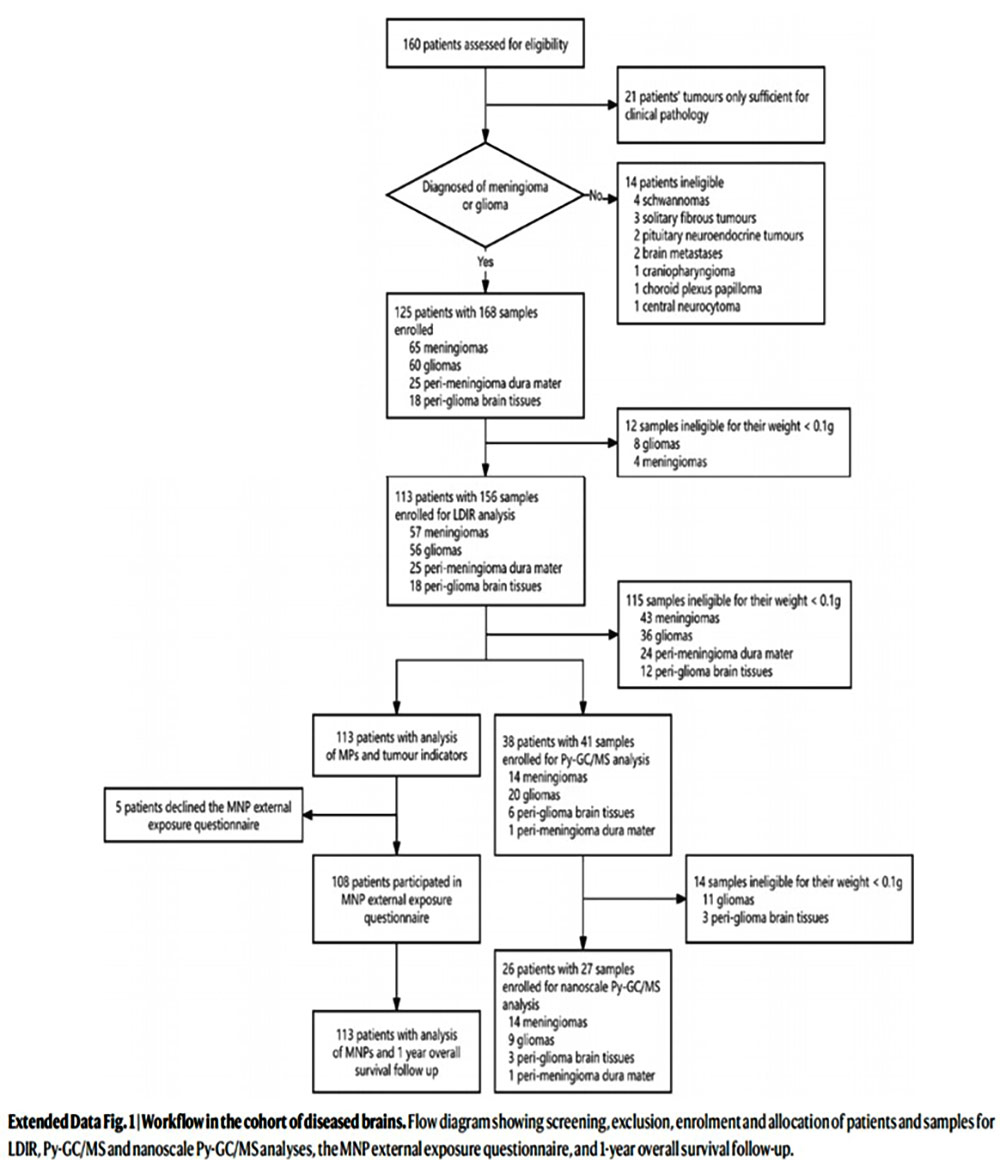
Workflow in the cohort of diseased brains.
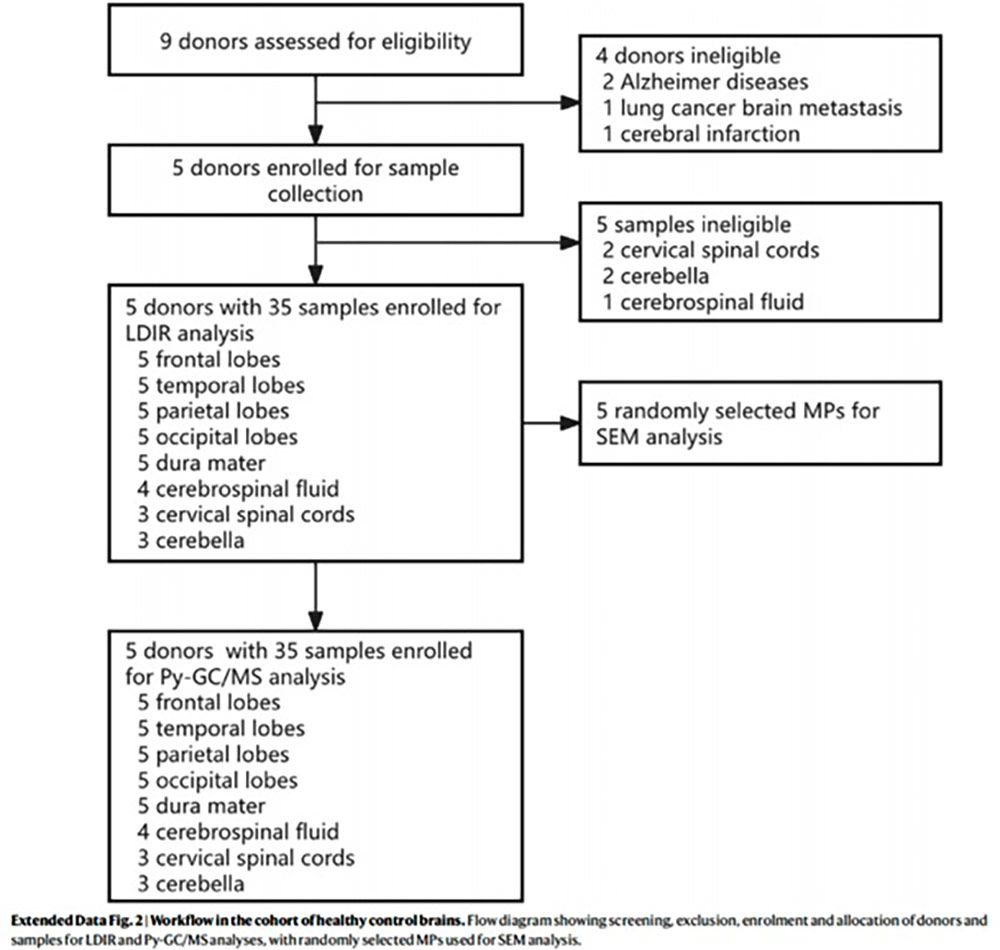
Workflow in the cohort of healthy brains.
What measures were taken to prevent plastic contamination in the samples analyzed in the study? This is why some previous studies have been questioned by the scientific community.
Compared with previous studies, this work adopted a more rigorous plastic-free tissue collection protocol, strict quality control procedures, and optimized analytical methods. The key measures are listed as follows:
- All tissue sampling was performed prospectively with strict precautions against exogenous plastic contamination throughout the entire procedure.
- Plastic contamination screening was conducted for all surgical instruments and operating room environments.
- The extraction and detection workflow for microplastics in human brain tissue was optimized to substantially eliminate interference from endogenous background signals.
- A combined multi-modal analytical strategy was applied, enabling complementary advantages among different detection techniques.
What are the possible routes by which MNP enters the brain?
In the present study, we proposed two hypotheses. The first is the vascular retention hypothesis, which posits that plastic particles remain confined within vascular lumens and do not penetrate the brain parenchyma. The second is the blood-brain barrier hypothesis, stating that plastic particles may cross compromised barriers and infiltrate the brain parenchyma. Other transport pathways such as endocytosis may also exist; however, our study lacks direct supporting evidence for these mechanisms, so they are only briefly discussed in the Discussion section in our medical article.
Can the size of the different particles have neurotoxic consequences?
Existing literature indicates that smaller particle sizes (e.g., nanoparticles) or larger specific surface areas may induce higher toxic potency. Nevertheless, most supporting evidence is derived from cellular or animal experiments. Discussing toxicity without reference to physiologically relevant human exposure doses is not scientifically sound. Accordingly, future research priorities should employ advanced analytical techniques to accurately characterize actual human exposure levels.
Do all the tissues or layers that protect our brain behave the same way?
Each type of tissue possesses distinct histological structures and physiological characteristics, and their protective effects on brain parenchyma have not yet been fully elucidated. Neuroscience also represents one of the most worthy research fields at present.
Can the presence of plastic in the brain affect the aggressiveness of cancer?
No relevant evidence is available at present, please refer to my above comments regarding particle surface area. This question requires high-level evidence-based medical data and prospective cohort studies for verification, and we are currently conducting relevant research to address this issue.
Is it possible to make any kind of comparison between samples from healthy brains and those from patients with cancer?
Such comparisons have already been performed in our manuscript. We observed significantly higher plastic particle concentrations in peritumoral brain tissues relative to healthy brain tissues, which further suggests that a compromised BBB may facilitate greater particle accumulation in the brain.
Based on the data from the study, could it be possible that a healthy brain might eventually develop a tumor due to the accumulation of MNP?
This cannot be proven. All existing studies have only identified correlations rather than causal relationships.
What exposure and cancer risk factors can be identified from this study?
This study cannot establish an association between exposure factors and tumor growth or progression. It can only identify exposure factors potentially correlated with intratumoral plastic concentrations. The most prominent factor we identified is the frequency of intravenous injection, which we consider the most direct route of human plastic exposure.
Is there any hospital- or medical-related risk that currently goes unnoticed and should be taken into account?
Unnecessary medical injections should be minimized, as there are currently no industry standards governing plastic products used in medical settings.