

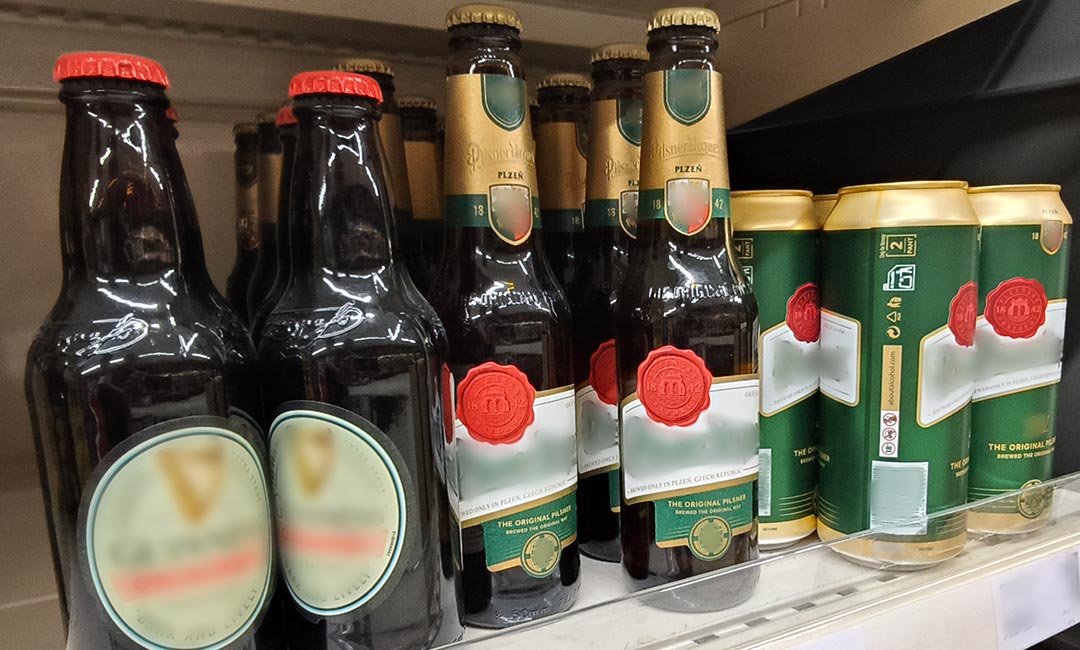
DESTACADO
Albert Anguera Sempere, envases alimentarios y...
Sustancias químicas relacionadas con el cáncer...
Contaminación por ozono troposférico
Nuevo estudio chileno revela cómo las...
Unos Pilares 2025 a golpe de...
¿Los envases de vidrio generan más...
Contaminantes químicos eternos en vinos
De Hitler a los microplásticos
Microplásticos en el aceite de oliva
Señales de daños cerebrales en aves...
Stop Plástico
Banner
  • Quiénes somos
  • Vertidos incontrolados
  • Puntos limpios
  • Información
  • Prensa
    • Stop Plástico en la Prensa
    • Noticias sobre Medio Ambiente
  • Contacto

Do glass containers generate more microplastics than plastic containers?

por StopPlástico 15 de octubre de 2025
escrito por" StopPlástico 15 de octubre de 2025
2,8K

In May 2025, researchers from the French agency ANSES, led by Dr. Guillaume Duflos, published a study claiming that beverages packaged in glass contained more microplastics than the same beverages in plastic containers.
Recently, another study by Dr. Jane Muncke of the Food Packaging Forum Foundation analyzed this report and raised serious doubts about whether glass containers generate more microplastics than plastic containers.

Presence of microplastics in different types of beverages available on the French market

The French Agency for Food, Environmental and Occupational Health & Safety (ANSES) published a study in May 2025 confirming the presence of microplastics in all the beverages analyzed.
The study analyzed the presence of microplastics in water, wine, tea, cola and lemonade, and beer. In different types of packaging: plastic, glass, metal, and carton.
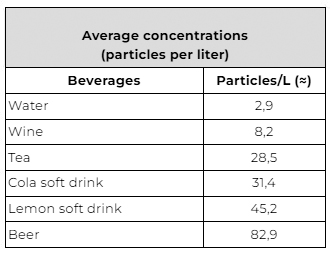
Presence of microplastics in water, wine, tea, cola and lemonade, and beer.

Presence of microplastics in water, wine, tea, cola and lemonade, and beer.

Surprisingly, the study yielded unexpected results. Tin and glass containers had the highest levels of microplastics per liter. Polyester particles were the most abundant in this type of container and included several types of unknown polymers.

In carton-type containers, the study did find a greater abundance of cellulose particles, which was expected.

Tin and glass containers had the highest levels of microplastics per liter.

The main hypothesis of the study’s authors was that the polyester found came from the paint on the metal closure of the container.
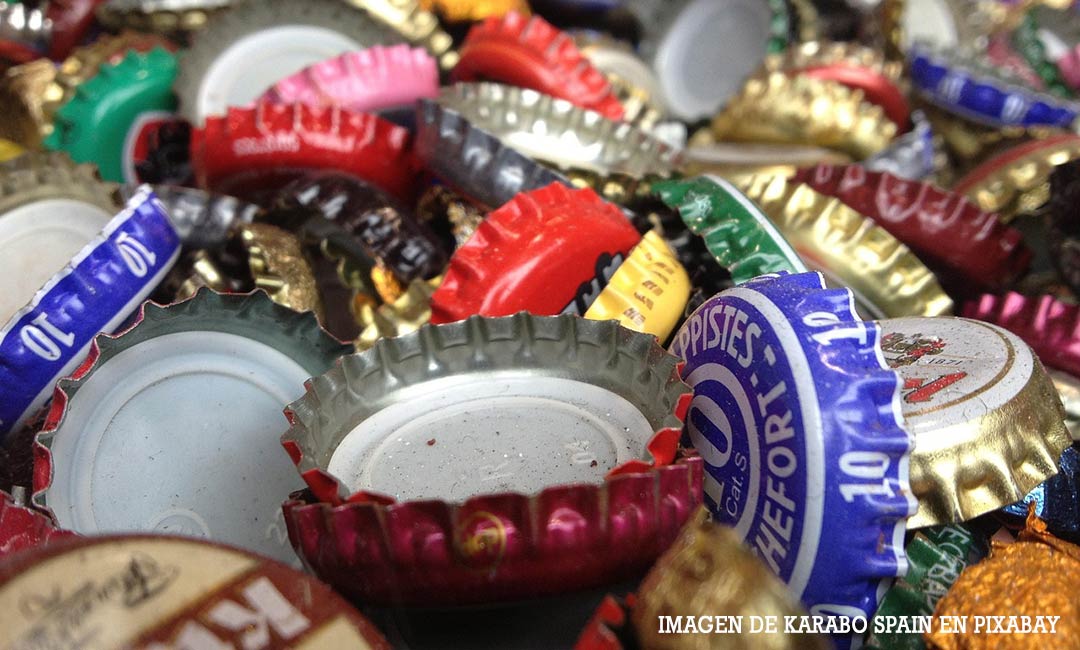
According to the study, the polyester found came from the paint on the metal closure of the container.

According to the study, the polyester found came from the paint on the metal closure of the container.

Concerns about the study that found glass bottles contain more microplastics

Another recent study by Dr. Jane Muncke of the Food Packaging Forum Foundation analyzes this report and raises serious doubts about the results and conclusions of the ANSES study.

Dr. Jane Muncke believes that the study “Microplastic contamination in a set of beverages sold in France” has methodological and interpretive problems that could lead to erroneous conclusions about the origin and quantity of microplastics, as she comments in her article.

  • Doubts about the origin of microplastics.
    It does not conclusively prove that the microplastics found come from the packaging, especially from the caps of glass bottles.
    In addition, the study criticizes the lack of controls to rule out other sources of contamination. Such as the bottling and filling process, production lines, transport and storage, or the liquid content itself (water, syrups, etc.).
  • Problems with the standardization of results.
    According to Dr. Jane Muncke, expressing the amount of microplastics in terms of particles per liter is not appropriate. The ratio between the surface area of the container and the volume of the beverage varies between container types.
  • Inappropriate comparison between beverages.
    Critics of the study point out that the different beverages are not directly comparable. They are produced using completely different industrial processes.
    They have different ingredients and treatments for their production and packaging, which can incorporate microplastics at different stages of the process.
  • Lack of traceability of the particles.
    The original study associated the particles found with the paint on the
    caps, based on their color and shape.
    This is insufficient as proof of origin, as the study did not carry out detailed chemical analyses to confirm that the particles found matched the composition of the cap materials exactly (FTIR or Raman spectroscopy).

Conclusions by Dr. Jane Muncke

The conclusions of the study by the French Agency for Food, Environmental and Occupational Health & Safety (ANSES) should be interpreted with caution.

It appears that there is insufficient evidence in this study to claim that glass bottles release more microplastics than other types of packaging, and further studies with better controls and adequate standardization are needed before making comparisons or regulatory implications.

SABER MÁS

  • Microplastic contaminations in a set of beverages sold in France
  • Comment on “Microplastic contaminations in a set of beverages sold in France” by Chaïb et al.
lucha contra el plasticoPFASplásticoquímicos eternosReciclajeresiduos plásticossalud
11 FacebookLinkedinWhatsappTelegramEmail
StopPlástico

Dejar un comentario

tres × uno =

* Al utilizar este formulario, acepta el almacenamiento y manejo de sus datos por este sitio web.


publicación anterior
Venta del Olivar, abandono de ruedas a pie de camino
próxima publicación
Monzalbarba, gran vertedero en el polígono Las Ventas y alrededores

VERTIDOS INCONTROLADOS

  • Miralbueno, continúa el abandono de basuras en el Camino Plano tras años de denuncias

    27 de febrero de 2026
  • Monzalbarba, residuos abandonados en el Camino Viejo de Monzalbarba

    27 de febrero de 2026
  • Casetas, residuos abandonados junto a la estación de cercanías

    27 de febrero de 2026

INFORMACIÓN

  • Albert Anguera Sempere, envases alimentarios y la salud humana

    15 de febrero de 2026
  • Sustancias químicas relacionadas con el cáncer de mama están presentes en envases alimentarios

    23 de diciembre de 2025
  • Contaminación por ozono troposférico

    13 de diciembre de 2025
  • Nuevo estudio chileno revela cómo las lluvias y vientos arrastran basura a nuestras playas

    5 de diciembre de 2025
  • Unos Pilares 2025 a golpe de gasoil

    18 de octubre de 2025

"

Stop Plástico finales de la Semana Europea de la Prevención de residuos 2022

STOP PLÁSTICO finalista por Aragón en los Premios de la Semana Europea de Prevención de Residuos 2022

STOP PLÁSTICO premio Mejor Proyecto Digital X Premios Aragón en la Red

Stop Plástico, ganador del I Concurso de Vídeos Cortos 2024 de la Cátedra de Cooperación para el Desarrollo de UNIZAR

STOP PLÁSTICO ganador del I Concurso de Vídeos Cortos 2024 de la Cátedra de Cooperación para el Desarrollo de UNIZAR

  • Facebook
  • Instagram
  • Linkedin
  • Youtube
  • Tiktok
Footer Logo
  • Quiénes somos
  • Vertidos incontrolados
  • Puntos limpios
  • Información
  • Prensa
    • Stop Plástico en la Prensa
    • Noticias sobre Medio Ambiente
  • Contacto

hola@stopplastico.org

STOP PLÁSTICO en defensa de la Naturaleza y el Medio Ambiente

Stop Plástico
  • Quiénes somos
  • Vertidos incontrolados
  • Puntos limpios
  • Información
  • Prensa
    • Stop Plástico en la Prensa
    • Noticias sobre Medio Ambiente
  • Contacto