

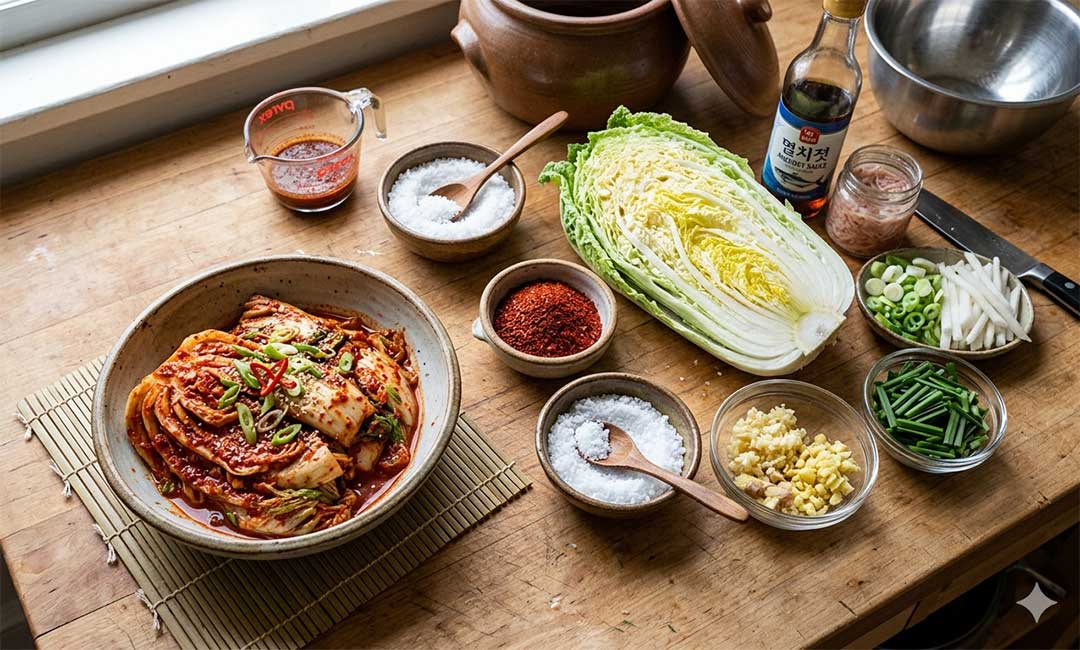

Kimchi, South Korea’s National Dish
Kimchi, a fermented food of Korean origin, is considered South Korea’s national dish. It is made from fermented vegetables, with napa cabbage (baechu) being the most common ingredient.
- Ingredients: In addition to cabbage, it typically contains radish, garlic, ginger, green onions, and gochugaru (Korean chili powder).
- Fermentation process: It is prepared using a technique involving salting and natural fermentation. This generates beneficial bacteria, primarily of the Lactobacillus genus.
- Flavor: It is a complex combination of sour, spicy, and salty flavors, with a very intense aroma due to fermentation and garlic.
- Nutritional value: a healthy food; low in calories, rich in fiber and vitamins (A, B, and C), and, above all, a natural probiotic that supports gut health.
- And now it appears to be an effective biosorbent capable of removing nanoplastics from the human body.
A probiotic derived from kimchi promotes the binding and excretion of intestinal nanoplastics
A recent Korean study, “Efficient Biosorption of Nanoplastics by Food-Derived Lactic Acid Bacteria” from the World Kimchi Institute, analyzed how the isolated bacterium CBA3656 (Leuconostoc mesenteroides) acts as a highly effective biosorbent for removing nanoplastics (NPs) from the digestive system.
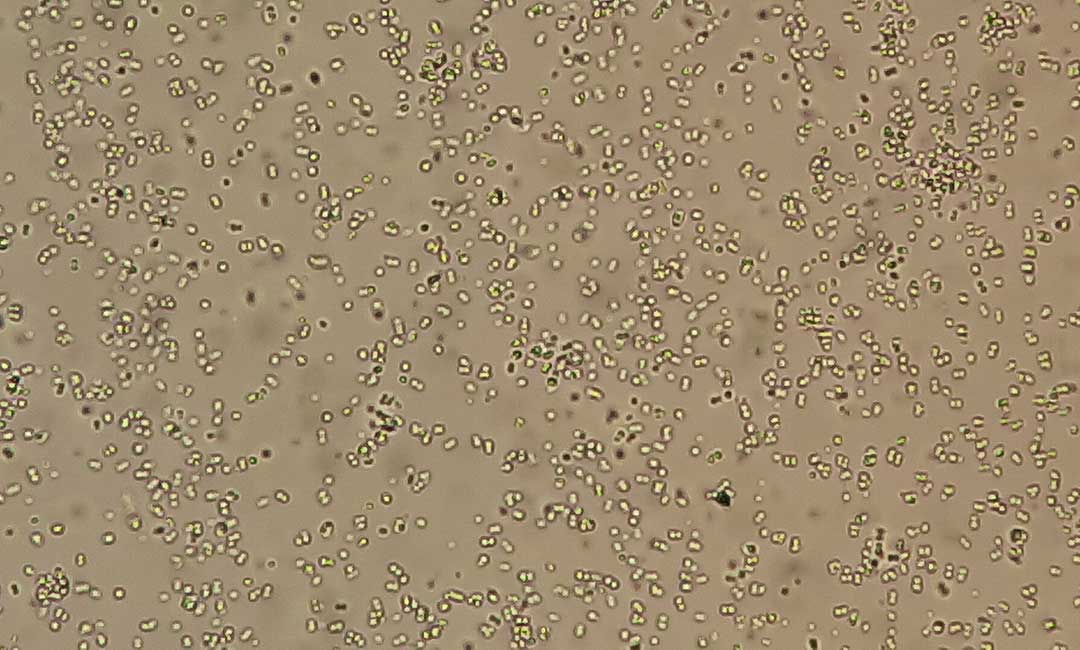
Leuconostoc mesenteroides in a wet mount under a microscope at 1600x magnification. Source: Wikipedia, By Ajay Kumar Chaurasiya – Own work, CC0.
The study explored biosorption (biological adsorption) as a potential solution. It utilized edible BAL bacteria (probiotics) with proven efficacy in removing heavy metals and other toxins.
The researchers analyzed the behavior of two strains derived from kimchi (Leuconostoc mesenteroides CBA3656 and Lactobacillus sakei CBA3608) under various conditions of temperature, pH, and concentration.
Exceptional results
The results obtained outperformed other intestinal fluid simulations.
The bacterium CBA3656 was able to absorb nanoplastics under a wide range of conditions: concentrations ranging from 10 to 200 ppm, temperatures from 4 to 55 °C, and pH levels from 3 to 9.
The adsorption mechanism is primarily physical and rapid. Specific functional groups on its cell wall (such as P=O and C=O bonds) were identified as acting as “magnets” that trap the plastic.
In conclusion, the study indicates that the bacterium CBA3656 emerges as a safe and versatile biological solution for reducing the accumulation of nanoplastics in the human body.
Functioning within a real digestive system
To test whether the bacteria functioned within a real digestive system—not just in a laboratory—the scientists conducted an experiment on live mice. The live mice were divided into groups to compare nanoplastic (NP) retention with and without administration of the Leuconostoc mesenteroides CBA3656 strain.
- Mice administered the CBA3656 strain showed significantly higher excretion of nanoplastics through feces compared to the control group.
- The researchers observed that the bacteria “trapped” the NPs in the gastrointestinal tract, acting as a shield that prevented the plastic particles from crossing the intestinal barrier and entering the bloodstream or accumulating in organs.
- At the end of the observation period, the amount of residual nanoplastics in the intestines of the treated mice was much lower.

Resumen gráfico del estudio.
Safety Conclusions
The effectiveness of this strain is due to its cell surface. Components of the bacterial cell wall (such as peptidoglycans and polysaccharides) act as a biological “magnet”.
In the intestine, where the pH varies, strain CBA3656 proved to be particularly robust, maintaining its ability to bind to plastic even under the acidic conditions of the stomach.
The CBA3656 bacterium, derived from kimchi and classified as GRAS (Generally Recognized as Safe), showed no adverse effects in mice, suggesting that it could be used in humans as a preventive probiotic supplement against micro- and nanoplastic contamination.
Naturally Fermented Foods
Lactic fermentation is a process in which bacteria convert sugars into lactic acid.
These foods help maintain the balance of our gut microbiota, preventing infections, aiding nutrient absorption, and now also helping to eliminate nanoplastics from our bodies.
Fermented Vegetables
- Kimchi: produces unique species such as Lactobacillus kimchii.
- Sauerkraut: cabbage fermented in brine. It is very rich in Lactobacillus plantarum and L. brevis. It should be consumed raw and unpasteurized; the bacteria are often destroyed by heat.
- Natural pickles: cucumbers or carrots fermented only in water and salt (brine), not in vinegar. Vinegar usually stops the growth of these bacteria.
Dairy and dairy products
- Plain yogurt: contains Lactobacillus bulgaricus and L. acidophilus. It’s best to make it yourself, but if not, make sure the label says “live and active cultures.”
- Milk kefir: It’s like yogurt but more potent, with a much greater diversity of strains.
- “Live” cheeses: Some aged but unpasteurized cheeses, such as Gouda, Cheddar, or Parmesan, can retain these bacteria.
Other Interesting Fermented Foods
- Sourdough: Sourdough bread uses Lactobacillus to ferment the flour, making it easier to digest.
- Water kefir: a delicious vegan alternative that also produces lactobacilli.
- Miso and tempeh: although their primary fermentation may involve fungi (such as Aspergillus oryzae), they can also harbor lactic acid bacteria during the process.