

Cryospheric Regions
Cryospheric regions (or the cryosphere) are all those parts of the Earth’s surface where water exists in a solid state (ice or snow).
These areas span the entire planet, from the peaks of the highest mountains to the depths of the permafrost in Siberia.
The cryosphere can be divided into several components based on the nature of the ice:
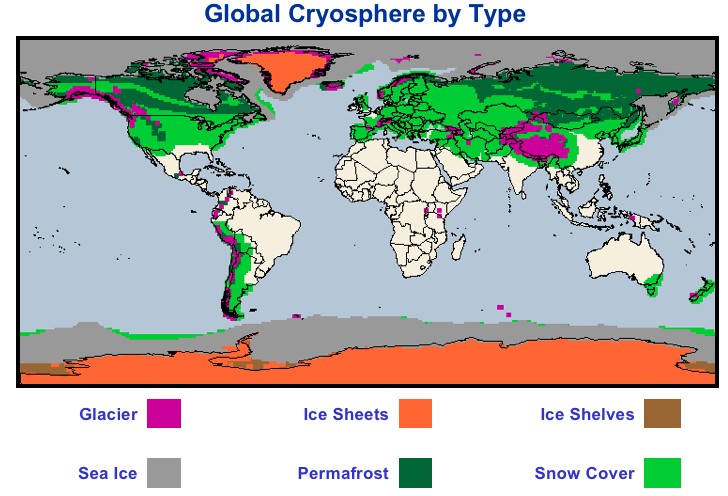
Image from the World Meteorological Organization showing the various components of the cryosphere.
- Snow cover (light green): solid precipitation consisting of tiny ice crystals, usually hexagonal in shape, that form in clouds and fall as white flakes.
- Glaciers (magenta) and ice sheets (orange): these are the large masses of ice on land. The largest are the ice sheets of Antarctica and Greenland.
- Sea ice in gray: frozen ocean water floating in the sea (such as in the Arctic). It does not contribute to sea level rise when it melts, but it is vital for the climate.
- Permafrost in dark green: soil or rock that remains frozen for at least two consecutive years.
- Ice shelves in brown: these are floating extensions of an ice sheet that are connected to a landmass.
- Freshwater ice: ice that forms on lakes and rivers during the winter.
Why are cryospheric regions so important?
These regions act as the Earth’s “thermostat” due to three critical functions:
Albedo Effect: Because snow and ice are white and reflective, they bounce up to 90% of sunlight back into space. Without them, the planet would absorb much more heat.
Freshwater Reservoir: About 70% of the planet’s freshwater is stored in these cryospheric regions.
Sea Level: If the ice in all these areas melted, all that freshwater would ultimately cause a rise in global sea levels.
The Albedo effect, a vicious cycle
Albedo is a measure of a surface’s reflectivity. This measure indicates what percentage of the solar radiation that reaches a surface is reflected back into space rather than absorbed.
By now, everyone can imagine that cryospheric regions are extremely sensitive to climate change.
Rises in the planet’s average temperature are causing a significant loss of cryospheric areas.
As ice and snow melt, the darker underlying surfaces (water or land) are exposed to solar radiation. These darker surfaces absorb more heat, which in turn accelerates melting—a vicious cycle that further contributes to global warming.
Dark Microplastics and Changes in Snow Metamorphosis
Unfortunately, cryospheric regions are no exception to the ubiquity of microplastics. However, little is known about the ability of microplastics to reduce albedo or accelerate snowmelt, as light-absorbing impurities.
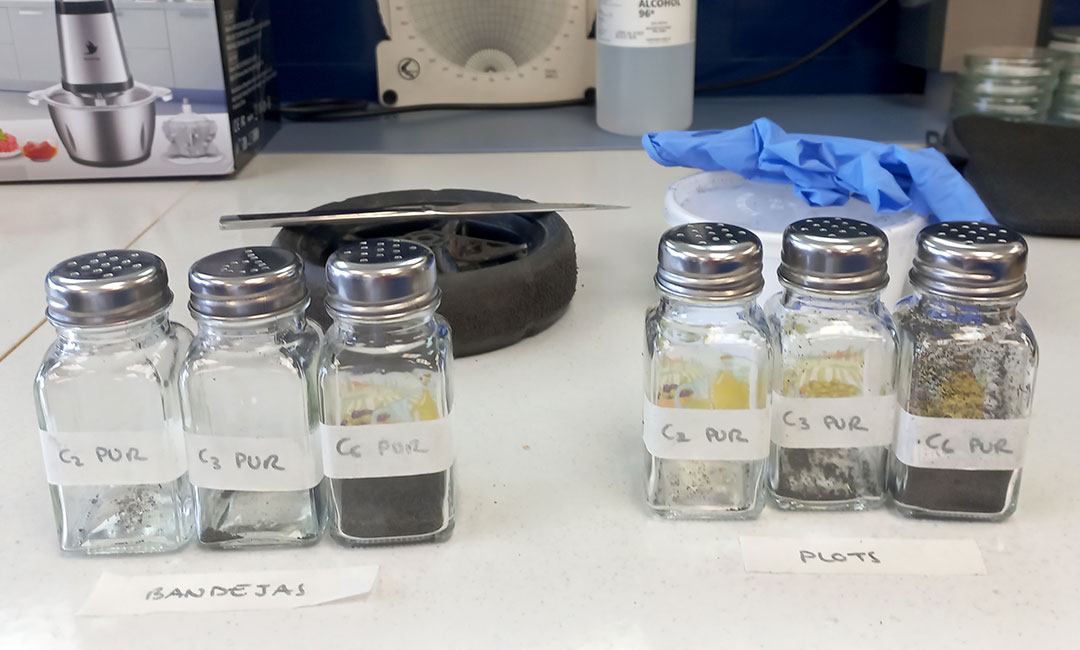
The study, led by Dr. Isabel Marín Beltrán from Zaragoza (Algarve Marine Sciences Center, currently a researcher at the University of Barcelona) and conducted in collaboration with researchers from IPE-CSIC, evaluates the effect of realistic concentrations of dark microplastics on snow properties.
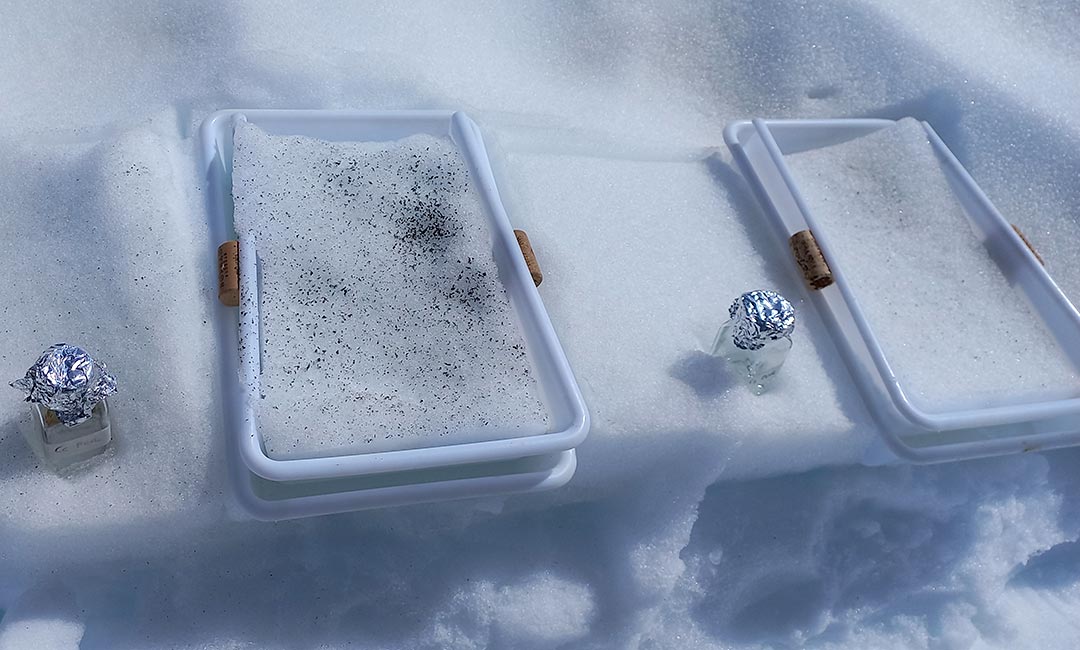
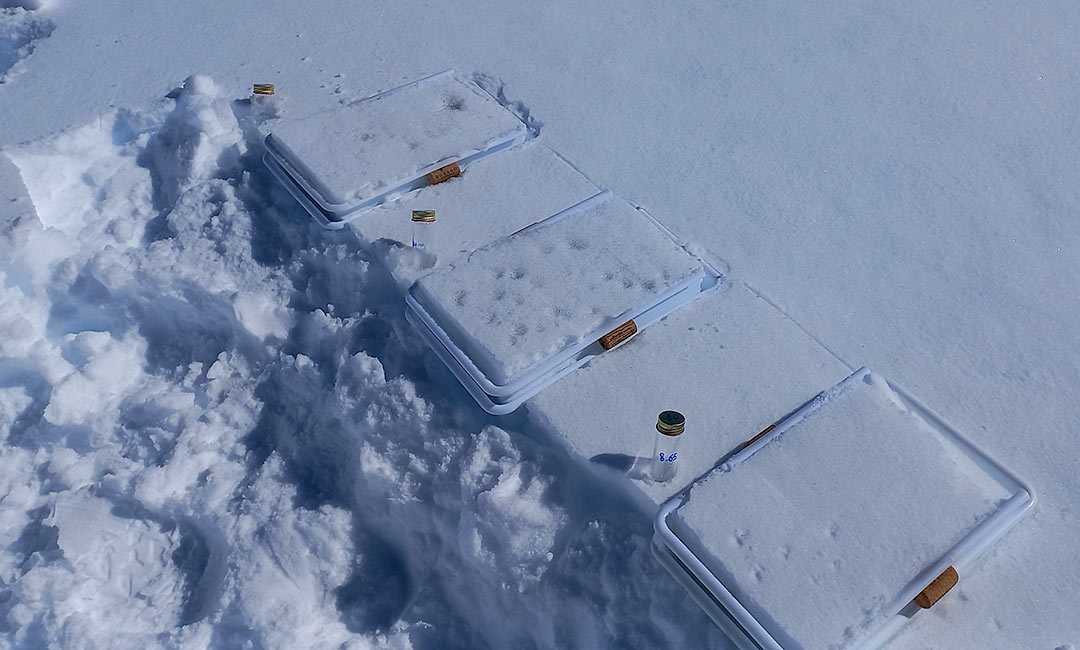
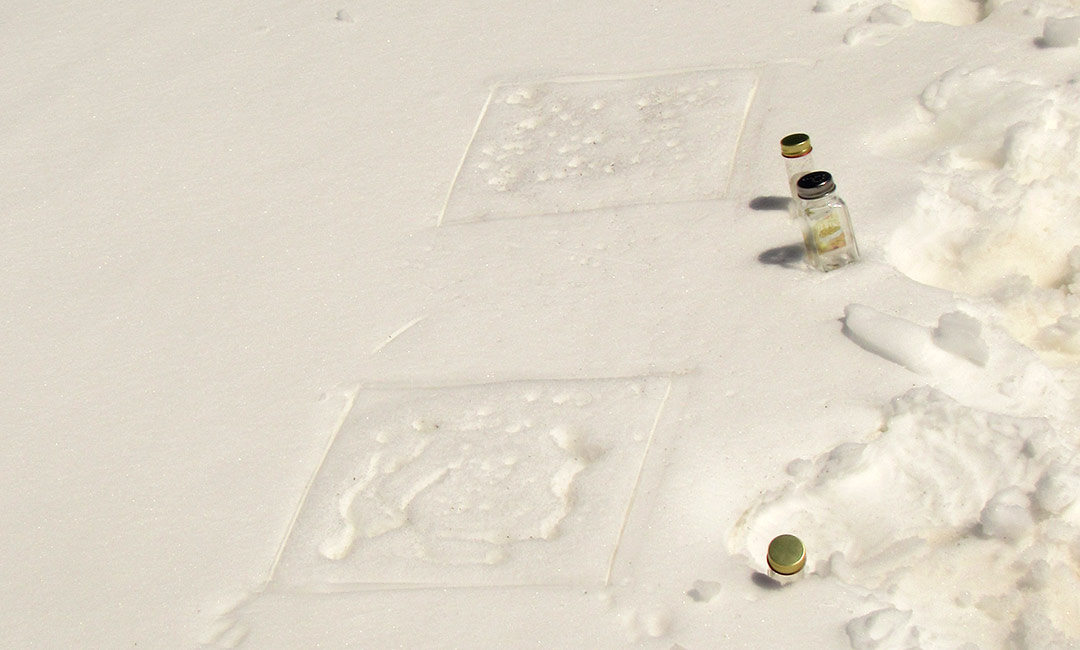
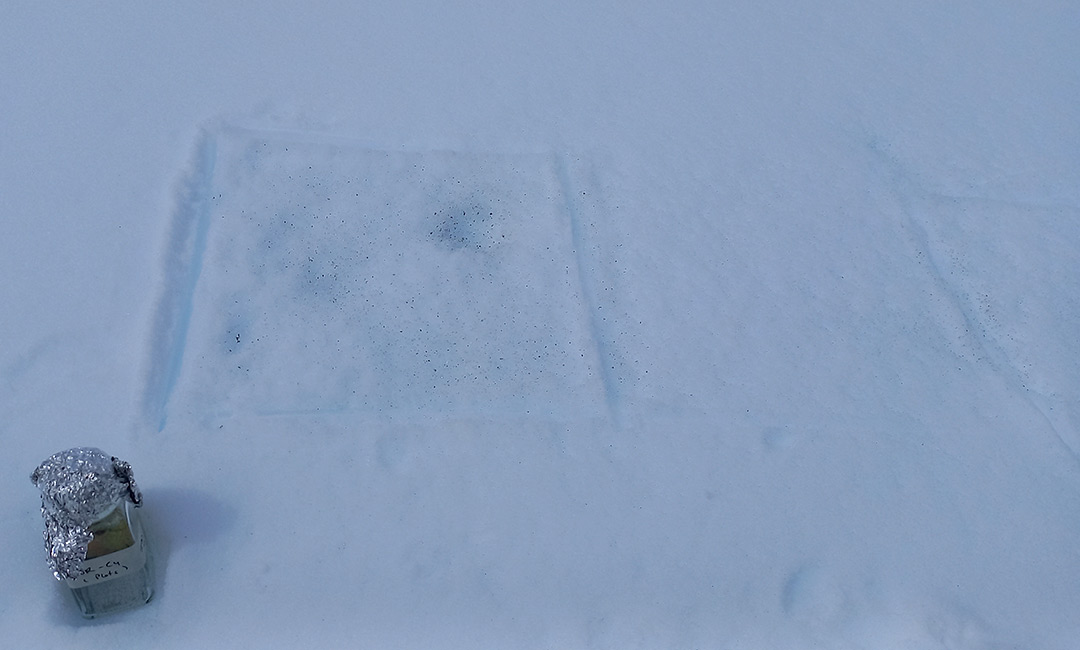
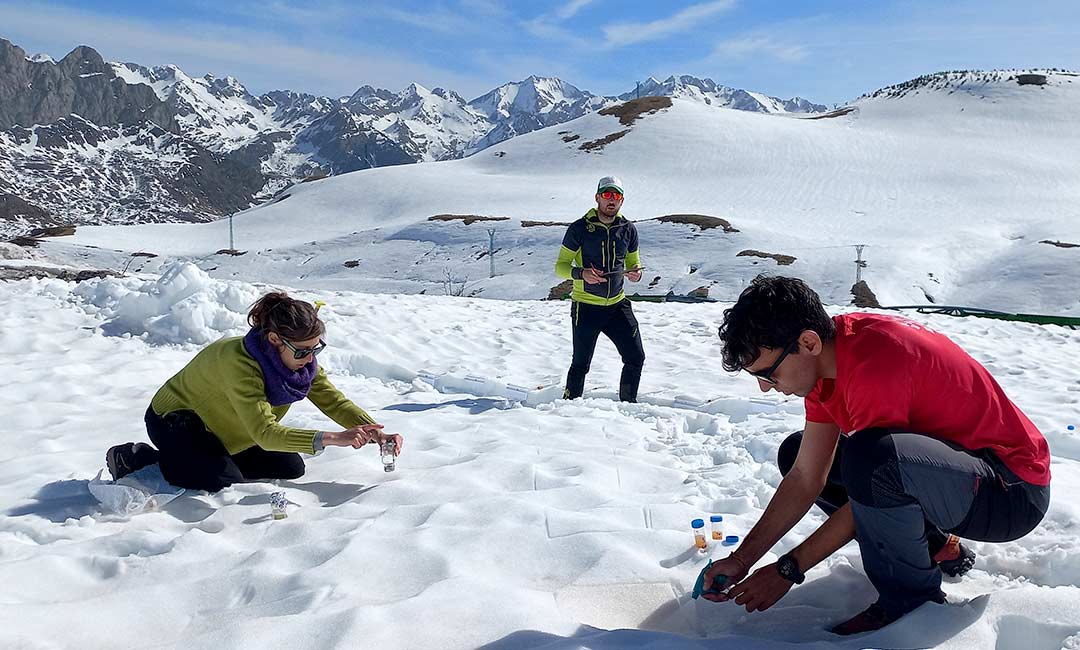
Realistic concentrations of dark microplastics added to trays containing a known amount of surface snow. Source: Isabel Marín Beltrán.
To this end, six in situ experiments were conducted in the Central Pyrenees (Spain), exposing surface snow to different concentrations of dark micro-pellets for 4 hours.
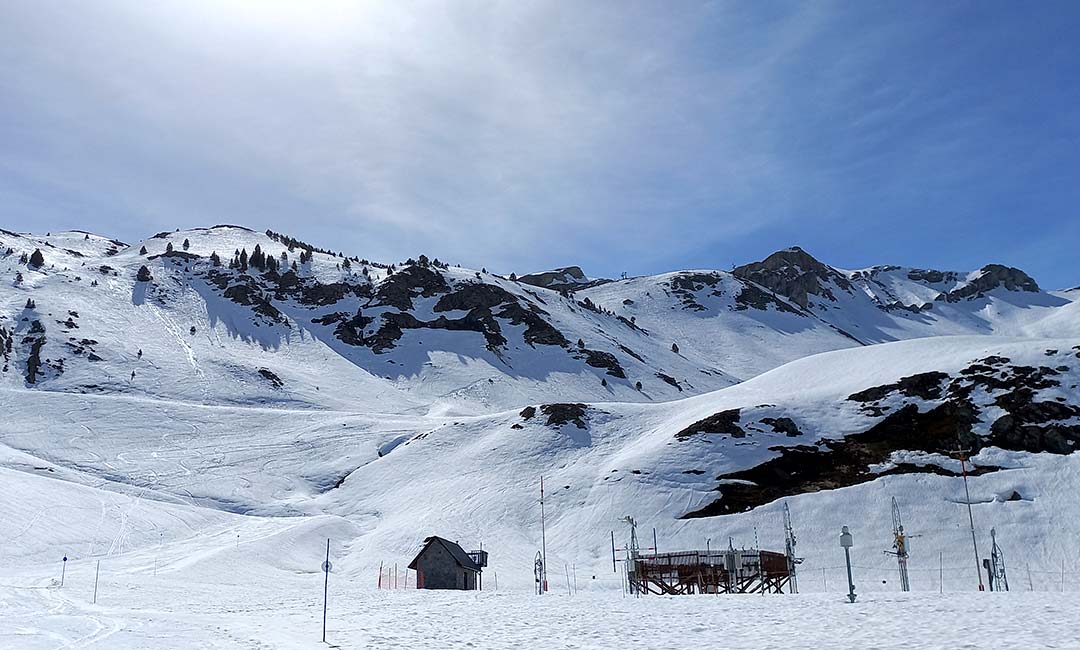
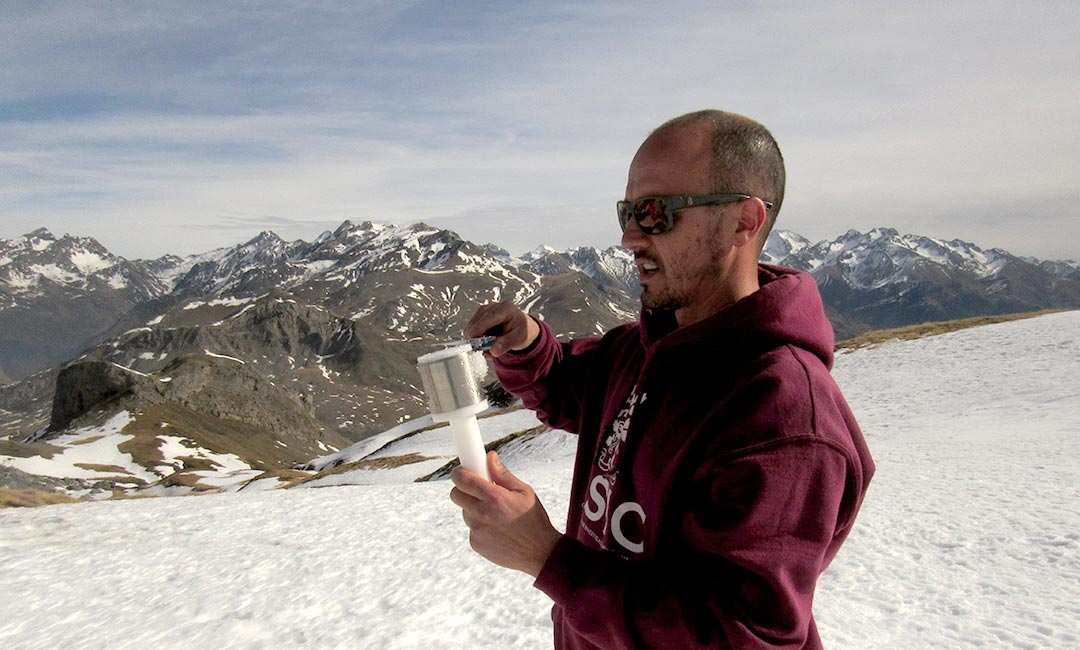
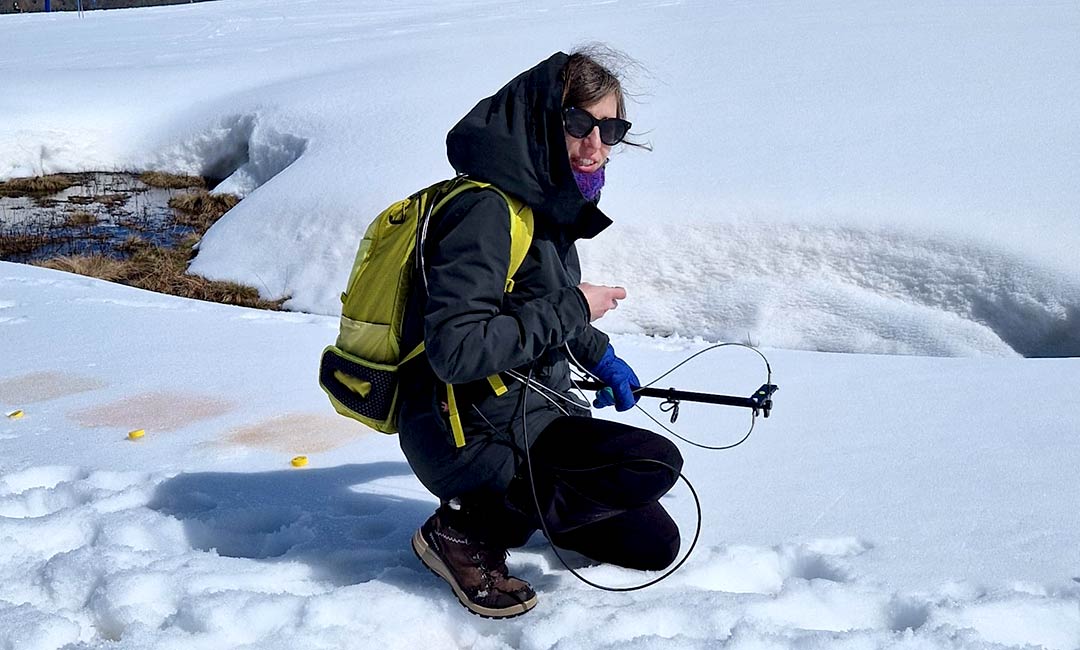
Most of the experiments were conducted in the vicinity of the Formigal–Sarrios ski resort (Huesca, Spain). Source: Isabel Marín Beltrán.
The results were variable and dependent on the initial snow conditions:
- Fresh snow: In the experiments conducted on fresh, low-density snow (<250 kg/m³), increasing concentrations of microplastics produced moderate decreases in albedo and significant changes in the specific surface area of the snow, reducing it by 11.4 m²/kg compared to the control samples, while there was hardly any snow melting (<1% change compared to controls).
- Aged snow: In contrast, in experiments conducted on aged, high-density snow (>450 kg/m³), higher concentrations of microplastics increased snow melting by up to 17% more than in the controls.
The study concludes by stating that further field studies are urgently needed to better understand the effect of microplastics on the global cryosphere.